Welcome to the next Q&A in our series highlighting people from various pathways along the entrepreneurial technologist journey in Arkansas and the nation.
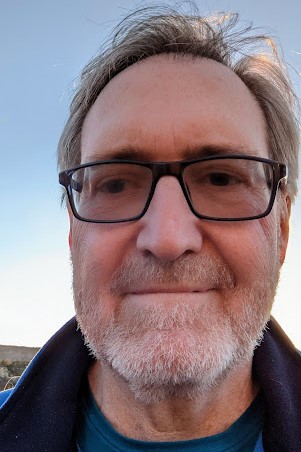
Dan Suhr of Eugene, Ore., is co-founder of Independent Platform, a consulting company that specializes in helping scientists and engineers effectively communicate their ideas and visions to strategic partners.
With many wins under his belt, he is well versed in the Small Business Innovation Research and Small Business Technology Transfer programs.
Bridging finance, manufacturing, strategic management, and federal R&D, Dan brings a uniquely practical lens to helping early-stage teams turn complex grant requirements into actionable strategies.
Through his collaboration with ASBTDC, he supports Arkansas innovators in building competitive proposals, demystifying the federal funding process, and translating great ideas into fundable innovations.
In this Q&A, he shares wisdom gleaned from 20 years of guiding startups through the SBIR/STTR landscape.
The Suhr Perspective on Federal Seed Funding
Q: You’ve written, won, and managed SBIR grants for more than two decades across multiple agencies. What do you see as the most common misconceptions startups have when they first approach the SBIR/STTR process?
A: There are a few that come up all the time.
The first is this idea that you have to be a Ph.D. to serve as a principal investigator. That’s just not true.
I’ve worked with PIs who have doctorates, but I’ve also worked with folks who only had a bachelor’s or master’s degree, and even with entrepreneurs who didn’t have a formal degree at all. What they had in common was passion for innovation and the ability to lead a team to test it. That matters far more than the letters after your name.
A second misconception is that teams are kind of on their own. In reality, there’s a lot of support out there. There are state and regional programs, consultants, university-affiliated centers, and most importantly, the agencies themselves encourage you to talk with their program directors.
Agencies like NIH, USDA, and NSF make it possible—even expected—that you’ll reach out, ask questions, and get feedback. Those conversations can make a huge difference in shaping a successful proposal.
And then the third one I’d highlight is that many founders think of SBIR/STTR as “funding for their startup.” It really isn’t. Yes, the award goes to the company, but the funding is not meant to keep the lights on—it’s meant to prove the feasibility of Innovation X. That distinction is really important.
This is about de-risking a specific technology, not subsidizing operations. Startups that understand that from the beginning are usually the ones who align best with the program’s goals and get the most out of it.
So, those three—PI credentials, feeling like you’re alone, and misunderstanding what the funding is actually for—are the ones I see the most.
Q: You’ve worked with countless entrepreneurs across disciplines, helping them shape their ideas into fundable proposals. What qualities or habits do you see in teams that succeed with SBIR, and what’s one piece of advice you always give?
A: The teams that succeed are the ones that aren’t afraid to get outside their own bubble. They reach out—to potential customers, to key collaborators, to advisors—because they know that no proposal is written in isolation.
The strongest applications are the ones that clearly show, “We’ve tested this idea in the real world. We’ve talked with end users. We’ve identified the right partners.” That kind of validation not only strengthens the science or technology, it also reassures reviewers that the team is serious about commercialization.
If I had to boil it down to one piece of advice, it’s this: don’t be shy about talking to people. Call a program director, have coffee with a potential customer, connect with a collaborator at a university or lab.
Those conversations shape your proposal in ways you can’t do alone, and they often open doors you didn’t even know were there.
Q: Your role with ASBTDC clients often involves translating complex requirements into actionable strategies. How do you approach guiding innovators through the often-intimidating federal funding landscape?
A: I try to break it down into two buckets.
First are the baseline SBIR program requirements. A company has to have fewer than 500 employees, the principal investigator has to be at least 50% employed by the small business at the time of the award, and there are a series of registrations (SAM, Grants.gov, eRA Commons) that have to be completed before you can even submit. Getting those lined up early is critical.
The second bucket is the specific requirements of the RFA [request for applications] or solicitation. That means reading the RFA carefully—sometimes multiple times—and paying attention to all of the documents it points to.
Know your deadlines, whether a letter of intent is required, and what the budget limits are. And make sure your team is aware of any restrictions, like what a subcontractor can or can’t do under that specific call.
My role is really to help clients turn what looks like a mountain of requirements into a checklist they can actually act on. Once they see the process in clear steps, it becomes a lot less intimidating.
Q: Your career spans finance, strategic management, startups, and now federal R&D consulting. How do those different experiences inform the way you work with clients today, especially early-stage innovators?
A: I’ve been fortunate to work in a lot of different industries, and that variety really shapes how I approach things today.
Some of my most interesting work was in manufacturing, where I served as a cost accountant. I spent a lot of time out on factory floors, learning how things are made, what they cost, how pieces fit together. That experience taught me to pay attention to details and to always connect the numbers to the real-world process behind them.
I think that background makes me something of a generalist, which is actually a strength when I’m working with early-stage teams. Most startups don’t need someone to go a mile deep into one narrow specialty. They need someone who can connect the dots across finance, operations, strategy, and now the SBIR world.
Q: What do you enjoy most about supporting Arkansas innovators through your collaboration with ASBTDC, and what should our clients know about how best to work with a specialist like you?
A: The good news is that Arkansas entrepreneurs are part of a very strong ecosystem. Compared to other regions I’ve worked in, the support network here—through ASBTDC, the universities, state programs, and local investors—really gives startups a head start. That makes my job enjoyable, because most of the clients I meet already have a good foundation and are ready to take the next step.
As for working with me, the best thing you can do is come in with a clear idea of what you want to accomplish with SBIR funding. I often use what I call a “concept write-up,” which breaks the project into four simple parts: What’s the problem? What’s your solution? If I had $300,000 over six months, what research would I do to prove this is feasible? And finally, why is the world a better place if we succeed?
If you can sketch those pieces out before we talk, it makes it much easier to move into a full proposal, identify gaps, and start recruiting the right collaborators. That structure keeps the process from feeling overwhelming, and it helps us focus on what really matters to reviewers.
###
Call on Us
If you are on a “lab to launch” journey to commercialize your novel innovation or are seeking capital for product development, Arkansas Small Business and Technology Development Center’s innovation consulting and market research staff can help!
Our Technology Team provides consulting, training, connections, and technical assistance to help you navigate non-dilutive seed fund options through America’s Seed Fund, the SBIR/STTR program. In addition, we assist you with one-on-one advice, educational opportunities, connections, and expert entrepreneurial support.